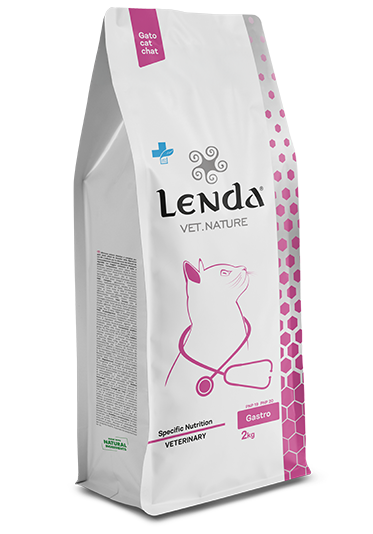
Extruded complete dietetic food for adult cats for the compensation of digestion disorders, IPE and for the reduction of intestinal absorption disorders. Highly digestible food with increased sodium and potassium content.
Key points:
Fish (white fish hydrolysate, Salmon hydrolysate), Potato starch, Peas*, Lentils*, Brewer’s yeast (Saccharomyces cerevisiae), Sweet potato*, Salmon oil, lignocellulose, drehydrated Krill (Euphausia superba, source of Omega-3 fatty acids and astaxanthin).
FAEC Complete (Yucca schidigera extract, yeast products, (Saccharomyces cerevisiae, as a source of MOS and nucleotides), glucosamine, chondroitin sulphate, methylsulfonylmethane, Chicory root, Salvia rosmarinus, Melissa officinalis, Taraxacum officinale, Salvia officinalis, Minthostachys verticillata, Cynara scolymus, Silybum marianum).
FAEC Inmune (microalgae oil Schizochytrium sp. (source of Omega 3 DHA fatty acids), Panax ginseng, Punica granatum, Zingiber officinale, Urtica dioica, Camellia sinensis, Curcuma longa, Harpagophytum procumbens), vegetables, Apple fibre, leaves of Moringa oleifera.
FAEC ProbioDigestive (Enterococcus faecium, Lactobacillus plantarum, Lactobacillus acidophilus, Lactobacillus rhamnosus).-*Natural raw materials.
Sources of highly digestible ingredients: hydrolysed white fish, Potato starch, Peas, hydrolysed Salmon, sweet Potato.
Crude Protein 34%, crude Fat 12%, crude Ash 7%, crude Fibre 3.5%, Calcium 1.1%, Phosphorus 1.1%, Na 0.3%, K 0.7%, ME 3719 Kcal/Kg.
Compensation of digestion disorders, exocrine pancreatic insufficiency and reduction of intestinal absorption disorders.
The gastrointestinal system of any living being is extremely large and complex, grouping different organs such as the mouth, esophagus, liver, pancreas, large intestine… With so many actors it is logical to face an even wider set of diseases; therefore, it is very complicated to obtain an effective dietary product, which is palatable, extremely digestible, with high quality ingredients and easy assimilation that allows the absorption of nutrients, as well as maintaining and promoting good flora, among many other objectives.
Diseases of the digestive system are extremely varied, the most common syndromes that we can find are vomiting, diarrhea, gastric retention… All these symptoms can be due to infections, inflammatory diseases, obstructions, pancreatic diseases, hairballs, pharmacological treatments, neoplasms, parasitosis… As we can see, there are so many possible causes, which does not facilitate their effective diagnosis and by extension their treatment.
In cats it is possible to find constipation leading to megacolon, pancreas of very difficult diagnosis and often related to inflammatory bowel disease IBD (or IBD), exocrine pancreatic insufficiency IPE (or EPI) as a result of pancreas mainly, without forgetting neoplasms for example.
In general, and in line with the objective of a good dietary food, a high digestibility of nutrients and ingredients should be sought. Both carbohydrates and proteins should be highly digestible so that the assimilation of nutrients in the small intestine is maximized and waste generation is minimized. High digestibility relieves the stress of producing the necessary bile, pancreatic and gastric secretions; the support of probiotic Lactobacillus strains that are present in the cat’s stomach, duodenum, jejunum and ileum, and the inclusion of these strains in recipes is focused on maximizing their intrinsic benefits.
Another of their main characteristics is their immunomodulatory effect, so they will be effective in diseases such as IBD, which causes colitis, gastritis or enteritis. The selection of Enterococcus Faecium and different strains of Lactobacillus will form an effective combination in nutritional support for the relief of this disease.
IBD can lead to malnutrition in the cat, due to malabsorption or maldigestion and loss of nutrients, so nutrients and Kcal must be provided. In some cases, diets with normal fat content have been reported to be well accepted, although lower fat content and from good quality sources are suggested.
Extruded complete dietetic food for adult cats for the compensation of digestion disorders, IPE and for the reduction of intestinal absorption disorders. Highly digestible food with increased sodium and potassium content.
Key points:
Fish (white fish hydrolysate, Salmon hydrolysate), Potato starch, Peas*, Lentils*, Brewer’s yeast (Saccharomyces cerevisiae), Sweet potato*, Salmon oil, lignocellulose, drehydrated Krill (Euphausia superba, source of Omega-3 fatty acids and astaxanthin).
FAEC Complete (Yucca schidigera extract, yeast products, (Saccharomyces cerevisiae, as a source of MOS and nucleotides), glucosamine, chondroitin sulphate, methylsulfonylmethane, Chicory root, Salvia rosmarinus, Melissa officinalis, Taraxacum officinale, Salvia officinalis, Minthostachys verticillata, Cynara scolymus, Silybum marianum).
FAEC Inmune (microalgae oil Schizochytrium sp. (source of Omega 3 DHA fatty acids), Panax ginseng, Punica granatum, Zingiber officinale, Urtica dioica, Camellia sinensis, Curcuma longa, Harpagophytum procumbens), vegetables, Apple fibre, leaves of Moringa oleifera.
FAEC ProbioDigestive (Enterococcus faecium, Lactobacillus plantarum, Lactobacillus acidophilus, Lactobacillus rhamnosus).-*Natural raw materials.
Sources of highly digestible ingredients: hydrolysed white fish, Potato starch, Peas, hydrolysed Salmon, sweet Potato.
Crude Protein 34%, crude Fat 12%, crude Ash 7%, crude Fibre 3.5%, Calcium 1.1%, Phosphorus 1.1%, Na 0.3%, K 0.7%, ME 3719 Kcal/Kg.
Compensation of digestion disorders, exocrine pancreatic insufficiency and reduction of intestinal absorption disorders.
The gastrointestinal system of any living being is extremely large and complex, grouping different organs such as the mouth, esophagus, liver, pancreas, large intestine… With so many actors it is logical to face an even wider set of diseases; therefore, it is very complicated to obtain an effective dietary product, which is palatable, extremely digestible, with high quality ingredients and easy assimilation that allows the absorption of nutrients, as well as maintaining and promoting good flora, among many other objectives.
Diseases of the digestive system are extremely varied, the most common syndromes that we can find are vomiting, diarrhea, gastric retention… All these symptoms can be due to infections, inflammatory diseases, obstructions, pancreatic diseases, hairballs, pharmacological treatments, neoplasms, parasitosis… As we can see, there are so many possible causes, which does not facilitate their effective diagnosis and by extension their treatment.
In cats it is possible to find constipation leading to megacolon, pancreas of very difficult diagnosis and often related to inflammatory bowel disease IBD (or IBD), exocrine pancreatic insufficiency IPE (or EPI) as a result of pancreas mainly, without forgetting neoplasms for example.
In general, and in line with the objective of a good dietary food, a high digestibility of nutrients and ingredients should be sought. Both carbohydrates and proteins should be highly digestible so that the assimilation of nutrients in the small intestine is maximized and waste generation is minimized. High digestibility relieves the stress of producing the necessary bile, pancreatic and gastric secretions; the support of probiotic Lactobacillus strains that are present in the cat’s stomach, duodenum, jejunum and ileum, and the inclusion of these strains in recipes is focused on maximizing their intrinsic benefits.
Another of their main characteristics is their immunomodulatory effect, so they will be effective in diseases such as IBD, which causes colitis, gastritis or enteritis. The selection of Enterococcus Faecium and different strains of Lactobacillus will form an effective combination in nutritional support for the relief of this disease.
IBD can lead to malnutrition in the cat, due to malabsorption or maldigestion and loss of nutrients, so nutrients and Kcal must be provided. In some cases, diets with normal fat content have been reported to be well accepted, although lower fat content and from good quality sources are suggested.