Renal problems in cats
Kidney problems in cats and more specifically Chronic Kidney Disease (CKD) is one of the most frequent pathologies in the daily veterinary clinic, affecting up to 20% of cats, especially elderly cats, as the kidneys deteriorate with age.
The functionality of the kidneys is altered and they lose the ability to filter the blood correctly and eliminate waste in the urine, so it happens that:
- The osmotic and acid-base balance is disturbed.
- Waste is not eliminated correctly and accumulates in the blood, which can damage other organs.
Some necessary nutrients are eliminated, as the filtering process fails, so the animal is not properly nourished and its health is affected.
Causes may include:
- Old age: most common, due to natural deterioration of the organ.
- Urinary tract problems: blocked by the presence of stones, urinary tract disease, infection or inflammation.
- Kidney tumour: resulting in failure of kidney function.
- Trauma: blow or injury to the area affecting the organ or other adjacent organs, such as rupture of the bladder or urinary ducts.
- Poisoning affecting the kidney
- Medications toxic to the kidney
- Genetics: hereditary predisposition to suffer from the pathology, which usually affects breeds such as Maine coon, Abyssinian, Siamese, Russian blue or Burmese.

Initially it is difficult to detect unless a blood test is done, as there are no symptoms, which is the main handicap of the disease, because when symptoms appear it is already advanced and it is late.
The blood is not filtered correctly and waste products begin to accumulate in the organism, producing azotemia (accumulation of urea and creatinine), this being the acute phase of the disease.
Later, and usually when the disease is already in the chronic phase, is when symptoms usually appear:
- Anorexia: weight loss
- Apathy and tiredness
- Dry and dull hair
- Polydipsia: excessive and constant thirst. Heavy drinking.
- Polyuria: frequent and abundant urination
- Vomiting and constipation
- High blood pressure
Gradually the kidney’s condition worsens, more and more waste products (urea and creatinine) accumulate in the blood, the blood becomes acidified and the concentration of minerals and nutrients is altered.
It is at this point that it is usually detected and unfortunately it is already irreversible, the healthy part of the kidney/s has been working excessively for some time to compensate for the deficiency, resulting in overload and with a great loss of functionality when the disease is detected. The animal will not be cured, but with proper treatment and nutrition the symptoms can be attenuated, in order to improve the quality of life and prolong it.
In addition to the medical treatment (if necessary) prescribed by your veterinarian and regular monitoring to control its evolution, dietary adaptation is essential.
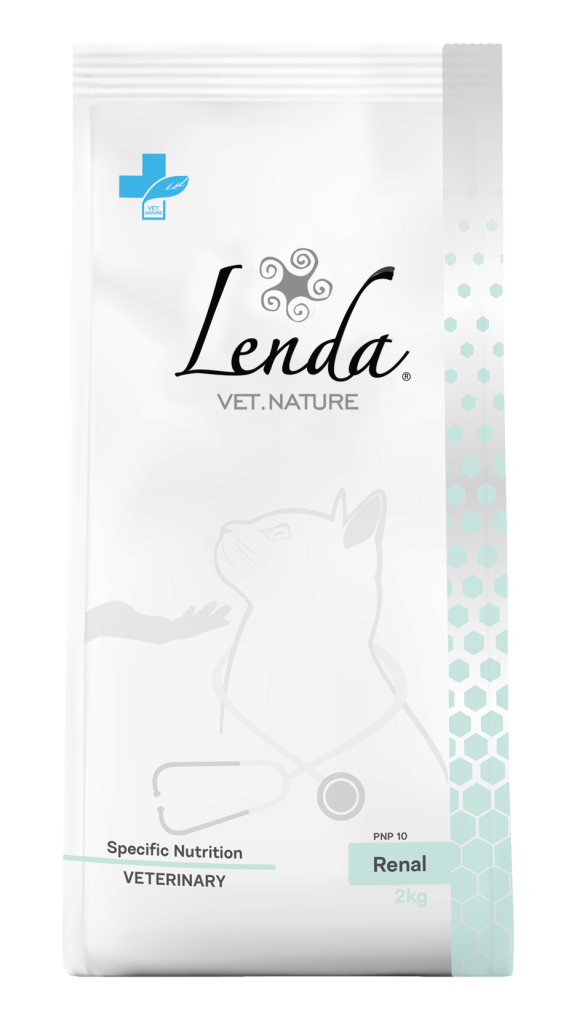
For these cases, Lenda offers Lenda VET Cat Renal, which meets all the requirements of a cat in this state, in which the diet must be:
- Appetizing to counteract loss of appetite and therefore weight loss and high in calories.
- Low in proteins. Although it is important to reduce the protein load to alleviate renal work, it is important to preserve a minimum amount as we must not forget that the cat is still a strict carnivore, and protein is essential for its health, albeit of optimum quality and maximum utilisation.
- Low in phosphorus.
- Low in sodium, as it cannot be eliminated correctly and its excess can cause arterial hypertension.
- High in fibre.
- High in potassium, as it tends to cause hypokalaemia (potassium level below normal).
- Rich in Omega 3, with anti-inflammatory power and which, combined with antioxidant ingredients, will help to reduce oxidative damage to the kidneys of these patients.
- Supplemented with probiotics, especially Lactobacillus acidophilus and Lactobacillus plantarum, which have reported benefits in the treatment of CKD, by controlling oxidative damage, restoring the intestinal microbiota and lowering blood urea levels.
It will also be important to encourage water intake, so the bowl should always be filled with clean, fresh water. They are particularly interested in tap water; taps and fountains.