Lenda VET Pancreatic for dogs
The pancreas is a small, elongated gland located next to the intestine that has two functions:
- Endocrine or Hormonal: it regulates blood sugar levels by producing insulin.
- Exocrine or Enzymatic: It produces enzymes that aid in the digestion of food. These inactive enzymes are then dumped into the intestine during the digestive process, where they are activated in order to break down food.
Two main diseases affect the pancreas: acute/chronic pancreatitis and exocrine pancreatic insufficiency (EPI).
Pancreatitis occurs when instead of being activated in the intestine, these enzymes are activated in the pancreas itself, resulting in “self-digestion”, inflammation and subsequent organ failure. It can be acute or chronic.
The reason for the inflammation is usually unknown, one of the most frequent being probably the consumption of an excessively fatty diet, but there may be other causes such as medication or other substances, infections, trauma or endocrine problems among others.
It is more common in small and medium-sized breeds, with miniature Schnauzer, Yorkshire or Terriers, dogs over 5 years old and of course obese animals being particularly predisposed.
In acute pancreatitis, or chronic pancreatitis re-aggravation peaks, we usually find the sudden appearance of some of the following symptoms:
- Fever
- Diarrhoea and yellowish vomiting
- Abdominal pain
- Lack of appetite and anorexia
- Apathy, depression and lethargy
- Dehydration
Initial priority is to stabilise the patient, often requiring fasting, intravenous fluid therapy and analgesia. Subsequent treatment will be assessed according to symptoms and damage, so antibiotics may be necessary if the pancreatitis is infectious, and medication may be needed for vomiting and diarrhoea.
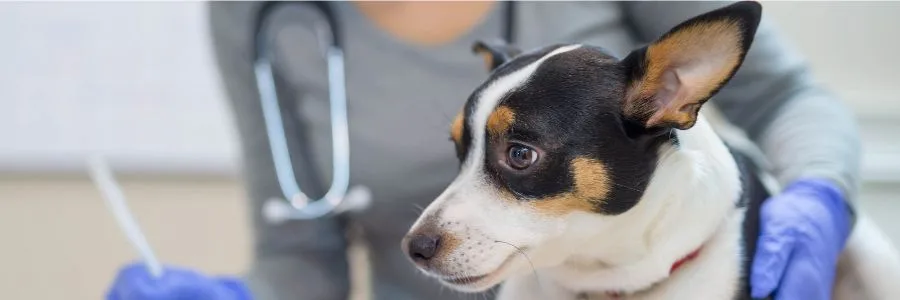
In exocrine pancreatic insufficiency (EPI), there is a deficit in the production of pancreatic enzymes, so that food cannot be digested properly, which may be caused by pancreatitis, among other things.
The symptoms would correspond to those of impaired digestion and consequent malnutrition:
An excess of faeces that would also be:
- Yellowish
- Greasy
- Pasty or diarrhoeic
- With a very bad odour
Great loss of weight and muscle mass: due to the impossibility of absorbing and using nutrients.
Polyphagia: eating a lot, a lot of appetite. In an attempt to nourish themselves. In this case there is an effective treatment, which consists in the supply of enzymes. Vitamin B12 (cobalamin) deficiency is common, so it should be supplemented.
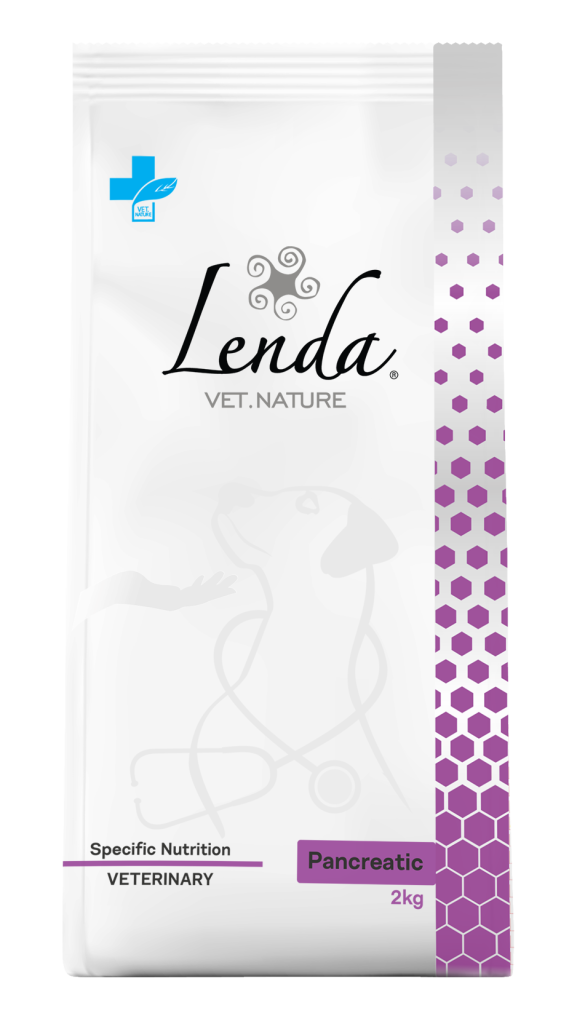
In addition, as with Pancreatitis, it will be essential to adapt the diet. As a dietary solution to both pathologies, Lenda offers Lenda VET Dog Pancreatic, which meets the fundamental dietary requirements of both pathologies:
With this we will try to restore the correct nutrition of our pet, and the success would be visible before the correct weight gain, clear improvement in the coat and above all with the achievement of a stool of ideal appearance, that is; brown colouring, frequency and optimal quantity and compact consistency.