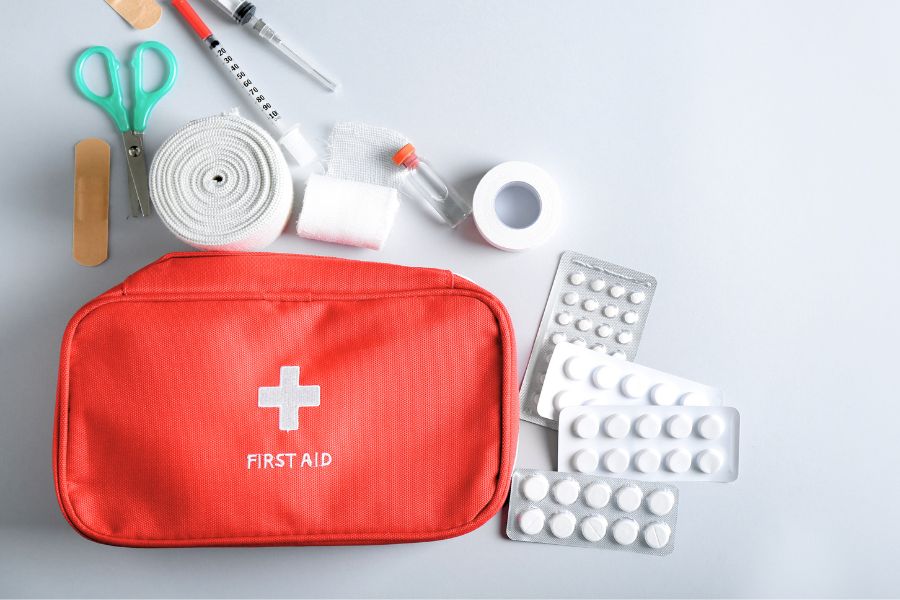
The safety and well-being of our furry friends are top priorities. That’s why a well-equipped emergency kit is an essential tool for responsible guardians.
In this article, we’ll guide you through the creation of a comprehensive emergency kit for dogs and cats, ensuring you’re prepared to deal with any unforeseen health situations that may arise.
Emergency first aid kit
1. Basic equipment
- Disposable gloves: protect your hands when treating wounds or applying medicines.
- Round-tipped scissors: useful for cutting bandages or cutting hair around wounds.
- Tweezers: for removing splinters or items embedded in the skin.
2. First aid supplies
- Self-adhesive dressings: to secure dressings or protect wounds.
- Sterile gauze: used to clean and wrap wounds.
- Medical tape: for securing dressings and gauze.
- Cotton wool: useful for cleaning and applying medication to wounds.
3. Basic medicines
- Analgesics approved for dogs and cats: consult your veterinarian for specific recommendations.
- Antihistamines (under veterinary prescription) to treat mild allergic reactions.
- Disinfectant solution to clean wounds and cuts.
4. Tools for the administration of medicines
- Needle-free syringes for administering liquids or oral medicines.
- Pipettes for liquid medicines to facilitate the administration of precise doses.

5. Important documents
- Vet contact information: Include your vet’s phone number and clinic.
- Vaccination record – keep copies of your furry’s vaccinations and preventative treatments.
6. Additional items
- Emergency thermal blanket, very useful in situations of shock or hypothermia.
- Torch with spare batteries for emergency situations at night.
- Elizabethan collar to prevent the dog or cat from biting or licking wounds.
7. Quick contact
- Furry emergency card: includes key information such as allergies and medical conditions.
8. Hydration kit
- Bottled water: make sure there is enough water for your furry friends in case of an emergency.
To sum up
Creating an emergency kit for dogs and cats is a preventative action that can make all the difference in critical situations. Make sure that all members of the family, including the furry ones, are prepared for any eventuality.
In addition, we recommend always contacting your veterinarian for specific guidance on any questions you may have, and if you have an emergency, always go to a veterinary clinic if you can.
Remember that this first aid kit is a preventive measure for special cases and should function as a quick and effective response in times of need.
Take care of your furry friend as he deserves!